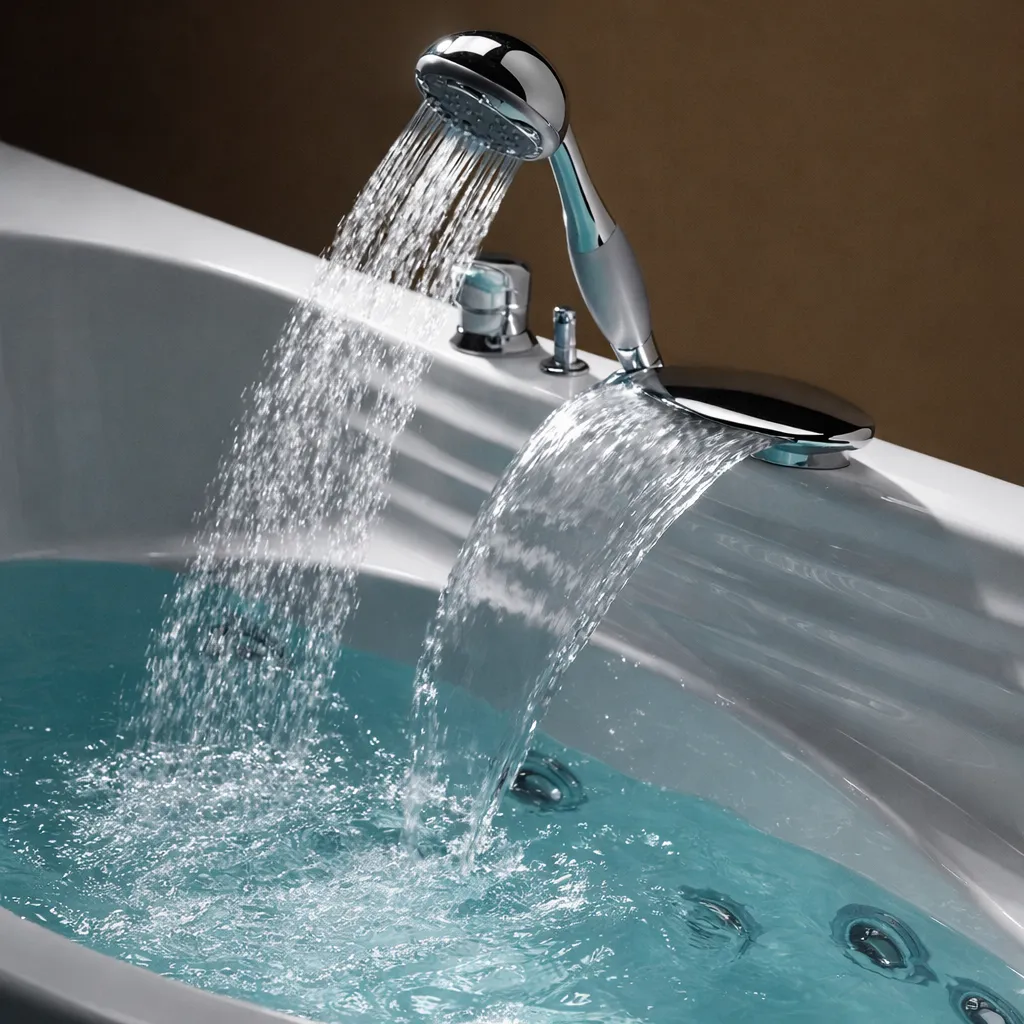
Bathroom-Faucets
Bathroom faucets are among the elements that most precisely define the style and identity of a bathroom.
They are not merely functional components, but genuine design details capable of enhancing the washbasin, bathtub, bidet and shower area through carefully considered shapes, proportions and finishes.
Infinito Italian Bath Atelier interprets luxury bathroom faucets through a profoundly Italian vision based on balance, elegance and attention to every detail.
The selection is designed to complete refined, contemporary and personal bathroom interiors in which every element contributes to creating a harmonious composition.
The bathroom-faucet collection is currently being expanded and will gradually be enriched with new solutions dedicated to the different areas of the bathroom.
.
Designer faucets for washbasins, bathtubs, bidets and showers
Every bathroom project requires faucets capable of interacting with the furniture, sanitaryware, wall coverings and overall architecture of the room.
Clean, geometric lines integrate naturally into contemporary bathrooms, while softer, sculptural or more elaborate shapes make it possible to create compositions with a stronger and more distinctive personality.
The selection will include solutions for the main areas of the bathroom, with faucets for washbasins, bidets, bathtubs and showers, designed for different installation methods and for both residential and professional projects.
The faucets should always be coordinated with the shape of the sanitaryware, the proportions of the furniture, the finishes of the accessories and the other metal elements within the room.
To complete the design of the bathing area, explore the bathtub collection.
Washbasin faucets
Washbasin faucets are among the most frequently used elements in the bathroom and should therefore offer a genuine balance between appearance, ergonomics and practicality.
The height of the faucet must be assessed in relation to the depth of the basin, its position and the available space on the countertop.
A faucet that is too low may make everyday use less comfortable, while a model that is excessively high in relation to the basin may increase splashing.
Faucets for countertop washbasins
Countertop washbasins generally require a taller faucet or a wall-mounted solution.
The spout should reach the central area of the basin correctly, without sitting too close to the edge or directing the flow towards surfaces that could encourage water to splash outside.
A tall faucet can become an important vertical element within the composition, particularly when the washbasin has a sculptural form or generous dimensions.
Faucets for integrated or undermount washbasins
Washbasins integrated into the furniture or installed beneath the countertop can be paired with more compact mixers mounted directly on the surface or on a prepared tap ledge.
In these configurations, it is important to check the space required to operate the control, the distance from the wall and the possibility of cleaning the area around the base of the faucet easily.
Wall-mounted washbasin faucets
Wall-mounted faucets free the countertop and create a visually clean and essential composition.
This solution requires precise plumbing preparation because the height, centre distance and depth of the components must be determined before the wall coverings are installed.
The position of the spout should be coordinated with the centre of the washbasin to provide a comfortable flow and reduce splashing.
Bidet faucets
Bidet faucets should be selected by considering the dimensions of the sanitary fixture, the position of the plumbing connections and everyday practicality.
A correctly proportioned mixer makes it easy to control water temperature and flow while maintaining an appearance consistent with the washbasin faucet.
In coordinated bathrooms, the washbasin and bidet are often completed with faucets from the same collection to maintain continuity in their shapes, controls and finishes.
Consistency does not necessarily require every element to be identical, but their proportions, materials and design language should interact harmoniously.
Bathtub faucets
The selection of faucets is particularly important when designing the bathtub area.
Height, position, proportions and installation method must be evaluated in relation to the shape of the bathtub, its location and the overall organisation of the room.
The faucets should make it possible to fill the bathtub comfortably, keep the controls within easy reach and ensure practical use of any hand shower.
Floor-mounted faucets for freestanding bathtubs
A freestanding bathtub can be enhanced by floor-mounted faucets that become an integral part of the composition.
The vertical presence of the mixer accompanies the shape of the bathtub and can help create an elegant, sculptural focal point.
This type of installation requires plumbing connections in the floor and careful positioning so that the faucet remains easy to reach without obstructing access to the bathtub.
Floor-mounted solutions can be particularly suitable for exclusive and freestanding bathtubs, which are designed to assume a central role within the architecture of the bathroom.
Wall-mounted bathtub faucets
Wall-mounted faucets create an orderly result and can be paired with bathtubs positioned against a wall, installed within a recess or incorporated into a structure.
The spout must be sufficiently long to extend beyond the edge and direct the water correctly into the bathtub.
Its height must also be established precisely by considering the thickness of the wall finish and the final position of the bathtub.
Deck-mounted bathtub faucets
Deck-mounted faucets are installed directly on the bathtub or on a prepared surface positioned next to it.
The composition may include a mixer, bath spout, diverter and pull-out hand shower, creating a complete and easily accessible system.
Before installation, it is necessary to verify that the available surface is sufficiently wide and structurally suitable for drilling.
Faucets for built-in bathtubs
Built-in bathtubs or models inserted into clad structures can be paired with discreet solutions integrated into the rim, surrounding deck or wall.
This configuration makes it possible to coordinate the faucets with marble, stone, ceramic tiles, porcelain stoneware or other materials used in the project.
Suitable technical access must be maintained for connections and components that may require inspection or maintenance.
Faucets for whirlpool bathtubs
Faucets for a whirlpool bathtub should be selected by considering not only the shape of the bathtub but also the presence of controls, jets, panels and technical components.
Their position must not interfere with access to the bathtub, the resting areas or the hydromassage systems.
A deck-mounted model can be practical when the structure includes a suitable prepared surface, while a wall-mounted solution can help keep more of the bathtub perimeter free.
In every case, the faucets should be integrated into the project from its earliest stages, together with the plumbing connections, waste, electrical supply and maintenance access.
To explore different shapes, dimensions and wellness systems, visit the whirlpool bathtub collection.
Faucets for the shower area
In the shower area, faucets play a central role both in managing the water and in defining the visual character of the space.
Mixers, diverters, overhead showers, hand showers and shower columns should be selected as parts of a single system, with technical compatibility between the different components carefully checked.
Shower mixer
The mixer controls the water flow and temperature.
It may be installed externally or concealed within the wall, depending on the desired appearance and the existing plumbing preparation.
Exposed solutions are generally more straightforward to install and inspect, while concealed mixers reduce the number of visible components and create a cleaner composition.
Overhead shower and hand shower
The overhead shower should be positioned at a suitable height and distribute water evenly within the protected area.
A hand shower adds flexibility and can make rinsing, cleaning the shower area and different types of use more convenient.
When multiple outlets are present, a diverter is required to manage the different functions correctly.
Shower column
A shower column combines the mixer, rail, overhead shower and hand shower within a single element.
It can be a practical solution for projects in which installation needs to be simplified while maintaining a visually coordinated composition.
For rooms in which the bathtub and shower share the same area, explore the bathtub-shower combinations, designed to bring both functions together.
Faucets for combined bathtub and shower areas
When a bathtub is also used as a shower, the faucet system should allow both functions to be managed easily.
It may include a dedicated bath spout, a hand shower and an overhead shower, coordinated through a mixer and diverter.
The controls should be positioned so that the water can be activated without necessarily stepping into the bathtub and without interfering with the movement of the glass screen.
The hand shower should be easy to reach both while bathing and showering, while the overhead shower should direct the flow towards the protected area.
To complete this type of composition, consider the bathtub screens and enclosures, designed to contain splashes and make the bathing area more versatile.
Elegant finishes for a coordinated bathroom
Faucet finishes can significantly influence the character of a bathroom.
Polished, satin, matt or textured surfaces can be coordinated with shower profiles, accessories, handles and the other details within the room.
Faucets should not be considered isolated elements, but as part of an overall design.
Colours, materials and proportions should interact to create a coherent, refined and recognisable interior.
Each finish can contribute to a different atmosphere: bright and understated, warm and enveloping, contemporary or more classical and decorative.
Chrome finishes
Chrome finishes reflect the light and coordinate easily with many bathroom styles.
They can be introduced into contemporary, classical or minimalist interiors and matched with shower profiles, handles and accessories in the same tone.
The polished surface makes water marks and fingerprints more visible and therefore requires regular cleaning to maintain an even appearance.
Satin finishes
Satin surfaces create a softer and more discreet appearance.
They reflect light less intensely than polished finishes and can form an elegant balance with stone, timber, matt ceramics and neutral colours.
Dark and matt finishes
Dark or matt finishes can introduce a bold, contemporary contrast.
They should be coordinated carefully with the other metal elements in the room, avoiding random combinations of too many tones and materials.
Warm and textured finishes
Warm colours and textured surfaces can help create a more enveloping and sophisticated bathroom.
These finishes interact naturally with marble, timber, natural stone and soft colour palettes and can become an important part of the overall composition.
How to coordinate faucets and bathroom accessories
Continuity between faucets and accessories helps make the bathroom feel more orderly and carefully designed.
Towel rails, shelves, hooks, dispensers and other accessories may repeat the finish of the faucets or introduce a deliberately planned contrast.
The objective is not necessarily to make every element identical, but to create a clear relationship between materials, proportions and colours.
The profiles of glass screens, furniture handles, mirrors and lighting fixtures can also contribute to the same design language.
To complete the composition, explore the designer bathroom accessories.
Proportions and everyday comfort
A faucet should be selected not only for its style but also in relation to the proportions of the sanitary fixture or bathtub.
The length of the spout, the height of the body, the distance from the washbasin and the space required to move the controls all affect everyday practicality.
Before choosing, it is important to check:
the dimensions of the washbasin, bathtub or bidet;
the position of the tap holes and plumbing connections;
the distance from the wall;
the space required for levers or controls;
the direction of the water flow;
compatibility with the overflow and waste;
the ease of cleaning the surrounding surfaces;
accessibility for future maintenance.
A visually elegant composition that is uncomfortable to use loses part of its design value.
Form and function should therefore always be considered together.
Installation and technical preparation
The installation method must be established before walls, floors and finishes are completed.
Wall-mounted and concealed solutions require precise preparation and must be coordinated with the final thickness of the finished surfaces.
Floor-mounted faucets require connections positioned in the correct location and a stable base, particularly when installed beside a freestanding bathtub.
For deck-mounted faucets, it is necessary to confirm that the bathtub or adjacent surface can be drilled and that the lower connections will remain accessible.
Installation should be carried out in accordance with the characteristics of the product and the plumbing system.
Correct installation contributes to stability, watertightness, smooth operation and greater durability over time.
Cleaning and maintaining bathroom faucets
Regular cleaning helps preserve the appearance of the faucets and limit limescale formation.
After use, it can be helpful to dry the surfaces with a soft cloth, particularly in areas with hard water.
Routine cleaning should be carried out using products that are compatible with the selected finish, avoiding abrasive sponges, aggressive substances and tools that could scratch or alter the surface.
Aerators and nozzles may also require periodic inspection because limescale deposits can affect the direction and consistency of the water flow.
Maintenance procedures should always follow the specific instructions supplied by the manufacturer.
Luxury bathroom faucets for residential and professional projects
Designer faucets are suitable not only for private homes but also for hotels, resorts, boutiques, spas, hospitality facilities and contract projects.
In these environments, each component must respond simultaneously to aesthetic, functional and design requirements.
The faucets become elements capable of reinforcing the identity of the space and immediately communicating a sense of quality.
Professional projects should also consider frequency of use, ease of cleaning, availability of components, maintenance access and intuitive operation for guests.
Infinito Italian Bath Atelier presents a vision of the bathroom in which elegance emerges from harmony between all its elements and from the ability to choose details designed to endure over time.
The detail that completes the bathroom
True elegance is often recognised in the details.
A well-proportioned faucet, a carefully chosen finish or a coherent composition can completely transform the perception of the room.
Bathroom faucets become the meeting point between technology, design and daily life: objects used every day that are also capable of expressing style, personality and attention to beauty.
Frequently asked questions about bathroom faucets
How should washbasin faucets be selected?
The shape and depth of the washbasin, the position of the tap holes, the height of the faucet and the length of the spout should all be considered.
The water flow should reach a central area of the basin without creating excessive splashing.
Which faucets are suitable for a countertop washbasin?
A countertop washbasin can be paired with a tall mixer or a wall-mounted faucet.
The choice depends on the height of the basin, the depth of the countertop and the plumbing arrangement.
Which faucets should be chosen for a freestanding bathtub?
A freestanding bathtub can be completed with floor-mounted or wall-mounted faucets or with a system installed on a nearby surface.
The solution should be selected according to the position of the bathtub and the plumbing connections.
Can faucets be installed on the bathtub rim?
It depends on the structure and preparation of the model.
Before drilling, the available space, the strength of the rim and access to the lower connections must all be checked.
Are wall-mounted or deck-mounted faucets better?
There is no single solution that is always better.
Wall-mounted faucets free the surface and create a more essential appearance, while deck-mounted models may be easier to integrate when the countertop or sanitary fixture is already prepared.
How should washbasin and bidet faucets be coordinated?
Products from the same collection can be selected, or different models with coherent shapes and finishes can be combined.
The objective is to create continuity between proportions, controls and metal details.
Do faucets and accessories need to have the same finish?
Not necessarily, but the finishes should interact harmoniously.
A coordinated selection creates a more uniform result, while a deliberate contrast can be used to give the project greater character.
How should bathroom faucets be cleaned?
A soft cloth and non-abrasive cleaning products compatible with the finish are recommended.
Aggressive detergents and abrasive sponges can damage or alter the surfaces.
Are designer bathroom faucets suitable for hotels?
Yes. They can be used in hotel rooms, suites, spas, resorts and contract projects by choosing solutions suited to the expected frequency of use, maintenance requirements and style of the property.
Infinito Italian Bath Atelier. Conceived in Italy, created for the world.
Italian elegance in its most authentic form